
Strategic procurement partner for your complete IT products from entry to enterprise level hardware to software delivery through out KSA
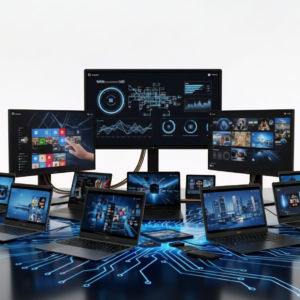

Laptops: Business laptop, Premium laptop, AI integrated laptop, Ultrabooks, Gaming laptop, Mobile Workstations, and 2-in-1 Convertibles.,Think clients
Desktops: AI Desktops,Tower PCs, Small Form Factor (SFF),Thin Clients, Gaming Desktops,All-in-One (AiO) systems, and Mini PCs (NUCs).
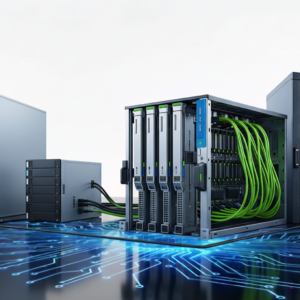
Servers: Rack-mount servers, Blade servers, and Tower servers for small businesses.
Workstations: High-performance systems for video editing, CAD, and 3D rendering.
Storage Area Network (SAN): High-speed, block-level storage systems (Fibre Channel/iSCSI) for mission-critical applications.
Hybrid Flash Arrays: Systems that mix SSDs for speed and HDDs for cost-effective mass storage.
Object Storage Appliances: Specialized hardware for massive amounts of unstructured data (videos, backups, AI training sets).
Hyperconverged Infrastructure (HCI): Integrated units that combine compute, networking, and storage in one box
Backup Appliances: “Plug-and-play” servers with pre-installed backup software (e.g., Datto, Unitrends).
Immutable Storage: Hardware that prevents data from being deleted or modified for a set period (crucial for Ransomware Protection).
Tape Drives & Autoloaders: LTO (Linear Tape-Open) technology for long-term, “air-gapped” offline archiving
Cloud Gateway Appliances: Hardware that bridges local storage to the cloud (Azure, AWS) for automated off-site copies.
Home/Media NAS: 2-bay to 4-bay units for 4K media streaming and personal cloud (e.g., Synology DS-series, QNAP).
Business NAS: Multi-bay rackmount or desktop units supporting RAID, virtualization, and high-speed 10GbE networking.
All-Flash NAS: High-performance arrays using only SSDs for low-latency database and creative workloads.
NAS Expansion Units: “Dummy” enclosures to add more drive bays to existing NAS systems.
External SSDs: High-speed NVMe-based portable drives for video editing and fast file transfers.
External HDDs: High-capacity, budget-friendly drives for personal photo and document archives.
Ruggedized Drives: Water-resistant and shock-proof storage for field workers and photographers.
Encrypted USB Flash Drives: Secure thumb drives with hardware-level encryption (FIPS-certified) for sensitive data.
Processors (CPU): Desktop and Server CPUs (Intel Core/Xeon, AMD Ryzen/EPYC).
Motherboards: ATX, Micro-ATX, and Mini-ITX boards.
Memory (RAM): DDR4/DDR5 modules for desktops, laptops, and ECC RAM for servers.
Storage: * SSD: NVMe M.2, SATA SSDs. AND HDD
Graphics Cards (GPU): Consumer gaming cards and professional workstation cards (NVIDIA RTX/Quadro, AMD Radeon).
Power Supply Units (PSU): 80 Plus rated power units.
Cooling Systems: Air coolers, All-in-One (AIO) liquid coolers, and case fans.
Routers: Wired and Wireless (Wi-Fi 6/7) routers.
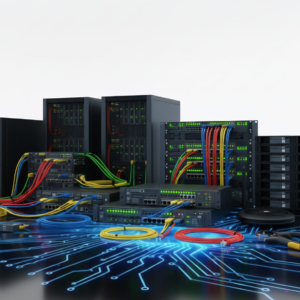
Switches: Managed, Unmanaged, and PoE (Power over Ethernet) switches.
Wireless Access Points (WAP): For extending Wi-Fi coverage in offices.
Network Attached Storage (NAS): Multi-bay storage servers for data backup.
Modems: Fiber, Cable, and LTE/5G gateways.
Network Interface Cards (NIC): Ethernet and Wi-Fi adapters.
Monitors: 4K displays, Ultrawide monitors, and Dual-setup screens.
Keyboards & Mice: Mechanical keyboards, ergonomic mice, and wireless combos.
Audio: Headsets, web conferencing speakers, and studio microphones.
Network Attached Storage (NAS): Multi-bay storage servers for data backup.
Webcams: HD and 4K cameras for remote meetings.
Docking Stations: USB-C and Thunderbolt docks for laptop expansion.
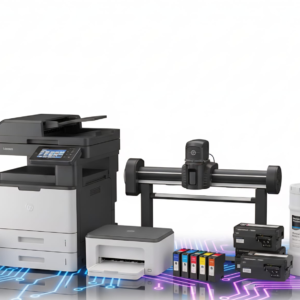
Printers: Laser printers (Monochrome/Color), Inkjet, and Multi-function (MFP).
Scanners: Document feeders and flatbed scanners.
Large Format: Plotters for blueprints and posters.
Uninterruptible Power Supply (UPS): Battery backups for desktops and servers.
Surge Protectors: Power strips with voltage protection.
Server Racks & Cabinets: Enclosures for networking gear.
Cabling: Cat6/Cat7 Ethernet cables, HDMI, DisplayPort, and Fiber optic patch cords.
Interactive Kiosks: Touch-screen stands for wayfinding, self-ordering, or check-ins.
Interactive Whiteboards (Smart Boards): Large touch-sensitive displays for classrooms and collaborative “war rooms.”
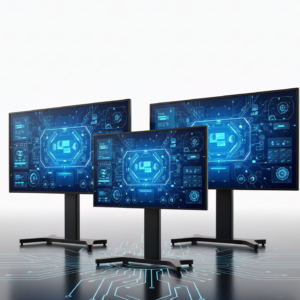
Video Walls: Ultra-narrow bezel screens designed to be tiled together into giant displays.
Large Format Displays (LFD): High-brightness screens for lobbies, menu boards, and advertising.
Transparent & Mirror Displays: Futuristic screens used in luxury retail and high-end corporate showrooms.
Electronic Shelf Labels (ESL): Small digital displays used by retailers for real-time price updates.
Next-Generation Firewalls (NGFW): High-performance hardware (like Fortinet FortiGate or Palo Alto PA-Series) that inspects traffic for malware and intrusion.
Unified Threat Management (UTM): All-in-one boxes for small businesses that combine a firewall, antivirus, and web filtering.
Intrusion Detection & Prevention Systems (IDPS): Dedicated appliances that specifically watch for and stop hacking attempts in real-time.
VPN Gateways: Hardware dedicated to creating secure, encrypted “tunnels” for remote employees to access the office network safely
Hardware Security Keys: USB or NFC tokens (like Yubico/Yubikey) used for Multi-Factor Authentication (MFA).
Biometric Scanners: Fingerprint readers, iris scanners, and facial recognition cameras for secure login.
Smart Card Readers: For organizations using physical ID cards to log into workstations.
Hardware Security Modules (HSM): High-end physical devices (often rack-mounted) used by banks and large enterprises to store and manage encryption keys.
Encrypted External Storage: Hard drives and USB sticks with built-in keypad PINs or fingerprint locks.
Trusted Platform Modules (TPM): Dedicated chips on motherboards that provide a “root of trust” for secure booting and disk encryption.
Email Security Appliances: Dedicated hardware that scans every incoming email for phishing, viruses, and spam before it reaches the user.
Content Filtering Appliances: Hardware that blocks employees from visiting malicious or restricted websites at the network level.
Network Taps: Devices used by security teams to mirror network traffic for analysis without interrupting the flow.
Digital Forensics Hardware: Write-blockers and imagers used by investigators to copy data from suspect drives without altering it.
Penetration Testing Tools: Specialized portable hardware (like Wi-Fi Pineapples) used by security pros to test for vulnerabilities.
Dome Cameras: Best for indoor/discreet use; often vandal-resistant and aesthetic for offices or retail.
Bullet Cameras: Long-range, highly visible cameras designed for outdoor perimeters and acting as a visual deterrent.
Turret (Eyeball) Cameras: Similar to domes but with a ball-and-socket design that eliminates “IR glare,” making them superior for night vision.
PTZ (Pan-Tilt-Zoom) Cameras: Motorized cameras that can be moved remotely; ideal for large areas like parking lots or warehouses.
Panoramic & Fisheye Cameras: 180° or 360° wide-angle views that can replace multiple standard cameras in a single room
Multi-Sensor Cameras: High-end units with multiple lenses in one housing to cover several angles simultaneously without blind spots.
Specialty Cameras: * Thermal Cameras: For detecting heat signatures in total darkness or fire prevention.
LPR/ANPR Cameras: Specialized for high-speed License Plate Recognition.
Solar-Powered Cameras: For remote sites without power/Ethernet (built-in 4G/5G).
NVR (Network Video Recorders): For modern IP cameras; supports high-resolution 4K/8K streams and AI processing.
DVR (Digital Video Recorders): For “Turbo HD” or Analog systems using coaxial cables (great for budget-conscious retrofits).
Surveillance-Grade Hard Drives: Specialized high-endurance HDDs (like Western Digital Purple or Seagate SkyHawk) designed for 24/7 writing.
Cloud Bridges: Hardware that connects local cameras directly to cloud storage for off-site backup.
PoE Switches: Power over Ethernet switches that provide both data and power to cameras through a single cable
PoE Extenders / Injectors: For long-distance camera runs exceeding 100 meters.
Wireless Bridges: Point-to-Point (PTP) hardware for sending video signals across buildings without digging trenches for cables.
Mounting Brackets: Junction boxes, pole mounts, and corner mounts
Cabling: Pre-made Siamese cables (Analog) or high-quality Cat6/Cat7 (IP).
Monitors: High-definition 24/7 rated surveillance monitors.
Connectors: BNC connectors, RJ45 jacks, and waterproof grommets.
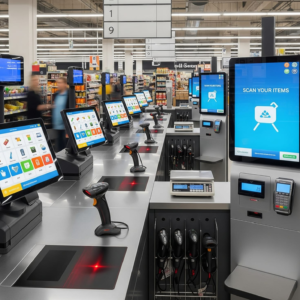
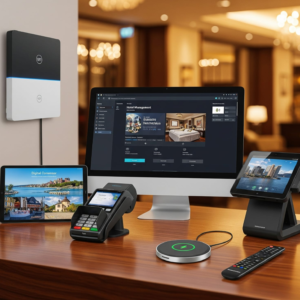
All-in-One Touchscreen Terminals: Integrated units with a built-in computer, display, and often a card reader or printer (e.g., Clover Station, Square Register).
Mobile POS (mPOS) Devices: Handheld terminals for line-busting, tableside ordering, or outdoor events (e.g., Square Terminal, Clover Flex).
Tablet POS Stands: High-quality swivel or fixed stands designed to turn iPads or Android tablets into professional checkout counters.
Self-Service Kiosks: Large, floor-standing or wall-mounted touchscreens that allow customers to order and pay independently.
EMV Card Readers: Devices for chip-and-pin, swipe, and magnetic stripe payments.
Contactless/NFC Readers: Specialized for “Tap to Pay” via smartphones (Apple Pay, Google Pay) and contactless cards.
Integrated Payment Terminals: Devices that connect directly to the POS software to eliminate manual entry errors.
Thermal Receipt Printers: The industry standard for fast, ink-free printing (available in USB, Ethernet, Wi-Fi, and Bluetooth versions).
Kitchen & Impact Printers: Rugged printers designed to withstand the heat and humidity of a kitchen environment.
Label & Barcode Printers: Desktop units for printing price tags, shipping labels, or SKU stickers.
Mobile Printers: Belt-clipped portable printers for printing receipts on the move.
1D & 2D Barcode Scanners: Handheld or hands-free laser/imager scanners (2D is required for scanning QR codes from phones).
Omnidirectional Desktop Scanners: Fixed-mount scanners common in high-volume grocery or retail stores.
Inventory Handhelds: Ruggedized scanners with built-in screens for warehouse management and stocktakes.
Cash Drawers: Heavy-duty metal drawers that trigger open automatically after a sale.
Customer-Facing Displays (CFD): Secondary screens that show the customer their items, prices, and tax in real-time.
Digital Scales: Trade-approved scales that integrate with the POS for weight-based pricing (e.g., for butchers or frozen yogurt shops).
Consumables: Thermal paper rolls, labels, and cleaning kits for scanners and printers.
All-in-One Video Bars: Sleek units combining a 4K camera, beamforming microphones, and high-fidelity speakers (e.g., Logitech Rally Bar, Poly Studio, Yealink A-Series).
Modular Room Systems: Separate components (PC, Camera, Audio) for larger boardrooms that require custom placement.
Certified Room Kits: Hardware pre-configured and certified specifically for Microsoft Teams Rooms, Zoom Rooms, or Google Meet.
AI Auto-Framing Cameras: Cameras that automatically zoom and crop to fit everyone in the room perfectly.
Speaker-Tracking Cameras: PTZ (Pan-Tilt-Zoom) cameras that use voice recognition to “follow” and focus on the person speaking
Tabletop Companion Cameras: 360° cameras placed in the center of the table to give remote viewers a “front-row seat” (e.g., Meeting Owl, Logitech Sight).
Dual-Camera Systems: One lens for a wide-angle view of the room and another for dedicated close-ups of participants.
Touch Controllers: Tabletop tablets (like the Logitech Tap or Neat Pad) used to join meetings with one touch and adjust room settings.
Room Scheduling Panels: Small displays mounted outside the room that show availability, current meetings, and allow on-the-spot booking.
Wireless Presentation Systems: Hardware that allows anyone to share their screen instantly without hunting for HDMI cables (e.g., Barco ClickShare).
Occupancy Sensors: IoT sensors that track room usage and automatically release a room booking if no one shows up.
Windows 11/12 Pro & Enterprise: Optimized for Copilot+ and AI-powered workflows.
Windows Server 2025/2026: For managing on-premise and hybrid cloud infrastructures.
Endpoint Protection (EDR/XDR): AI-driven threat detection for laptops and desktops
Antivirus & Internet Security: Consumer and SMB suites (e.g., Norton, Bitdefender, Kaspersky).
Identity & Access Management (IAM): Multi-factor authentication (MFA) and single sign-on (SSO) tools like Okta or Duo
VPN & Secure Tunneling: Business-grade encrypted remote access software.
Email Security: Anti-phishing and spam filters that protect Microsoft 365 or Google Workspace.
Office Suites: Microsoft 365 (Business/Family) and Google Workspace licenses.
Project Management Tools: Licenses for Monday.com, Asana, or Jira.
Creative Suites: Adobe Creative Cloud (Photoshop, Premiere, etc.) and Canva for Teams.
Video Conferencing Pro: Premium subscriptions for Zoom, Microsoft Teams, and Webex.
Accounting & Finance:
CRM (Customer Relationship Management):
ERP (Enterprise Resource Planning):
HR & Payroll: Platforms for managing global teams and payroll
Backup & Recovery Software: Veeam, Acronis, or Carbonite for server and workstation protection.
Cloud Storage: Premium tiers for Dropbox Business, OneDrive, and Google Drive.
Virtualization: VMware (Broadcom) or Microsoft Hyper-V for running multiple OS on one server.
Video Conferencing Pro: Premium subscriptions for Zoom, Microsoft Teams, and Webex.
Jeddah, Saudi Arabia
contact@e-worldsa.com
© Copyright 2025 E-WORLDSA. -- All Right Reserved